7 Ways to Create an Elevated Client Experience
When a client hires you, they're not just buying a beautifully designed space — they're buying the experience of getting there. In a market where more designers are competing for the same clients, and where portfolios increasingly look similar on Instagram, the experience you deliver is often the thing that actually sets you apart. It's also the thing that turns a one-time client into a referral machine.
Processes and templates make that experience possible to repeat. But the studios that feel truly elevated aren't the ones with the most polished PDF — they're the ones who've figured out how to layer genuine, thoughtful communication on top of a system that runs whether or not they're personally exhausted that week. Below, we're revisiting our original seven ways to create that experience, with a lot more detail on how to actually execute them — plus a new section on exactly what your client communication should say at every stage of the process.

EyeSwoon Office | Photography: Jenna Saraco
Curate an Elevated Welcome Kit
First impressions set the tone for the entire relationship, and most clients form their opinion of you within the first few days of signing — long before you've selected a single fabric. A welcome kit is your chance to control that impression instead of leaving it to chance.
A strong welcome kit does three things: it reassures the client they made the right decision, it sets expectations for how the project will run, and it gives them something to reference instead of emailing you every question that comes to mind. At minimum, include an overview of your process and timeline, a breakdown of how and when you communicate, what's expected of them (homework, decision deadlines, response windows), and a bit of your design philosophy so they understand the "why" behind your approach.
Digital is fine for the informational pieces, but pairing it with something physical — a handwritten note, a small welcome gift, branded stationery — signals a level of care that a PDF alone can't. This is exactly the kind of piece we build into our Client Process Bundles, so you're not starting the welcome kit from a blank page every time you sign a new client.
Personalize Communication at Every Step
Generic templates are a starting point, not a finish line. The studios clients rave about are the ones who reference something specific — a phrase the client used during discovery, a milestone in their life the project is tied to, a callback to something they mentioned in passing months ago.
This doesn't mean writing every email from scratch. It means building a system flexible enough to personalize in the moments that matter (a proposal, a big reveal, a wrap-up) while relying on consistent, pre-written structure for the moments that don't need reinventing (scheduling, invoicing, routine updates). We'll walk through exactly which of these fall into each bucket in the section below.
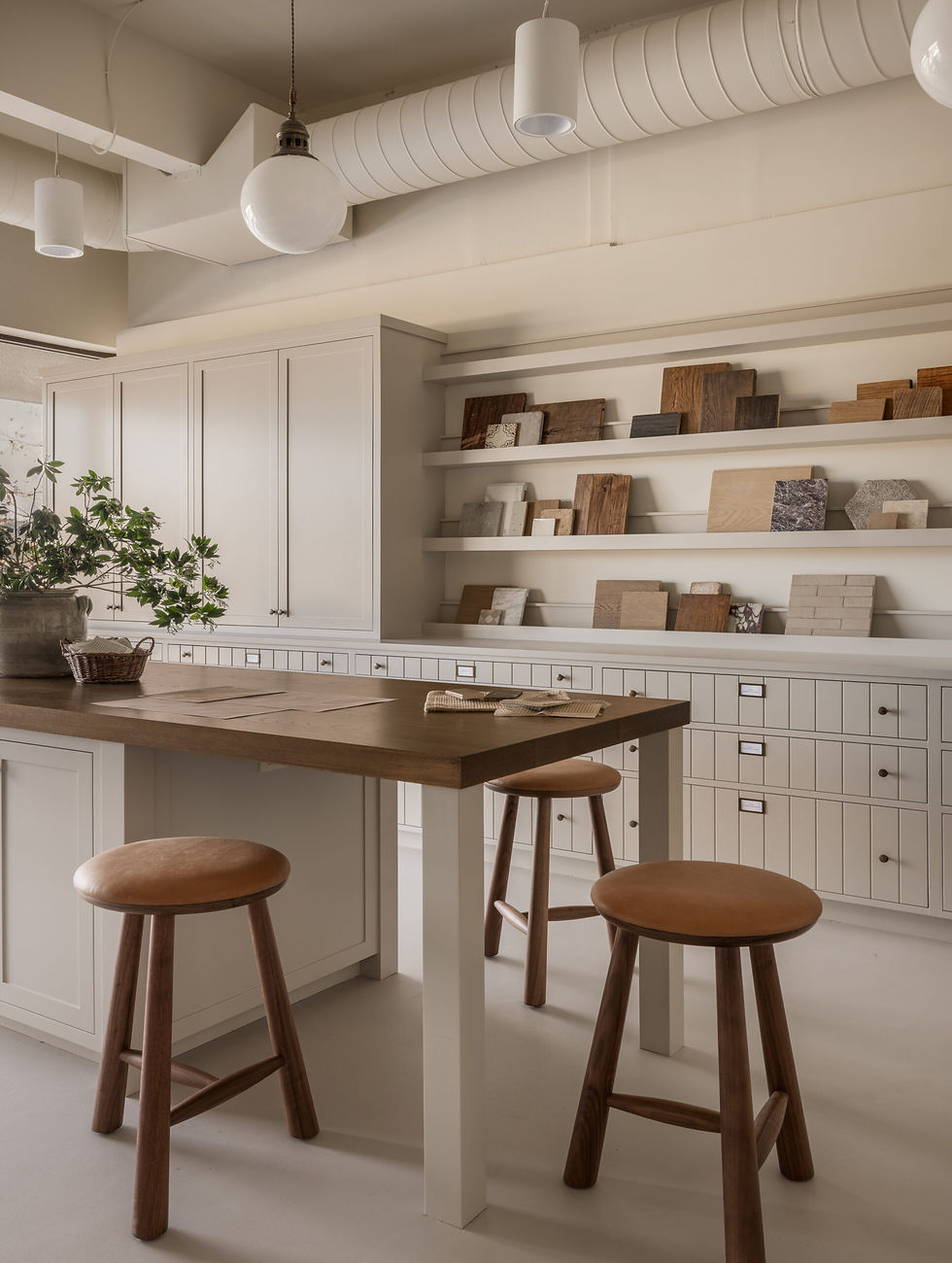
Amber Interior Design's Studio | Photography: Shade Degges
Incorporate Hospitality into Your Meetings
Hospitality doesn't require a budget most solo studios don't have — it requires intention. For in-person meetings, that might be a specialty drink, good coffee, or something local and specific to your city rather than a bag of gas-station snacks. For virtual meetings, a coffee gift card or a small curated box that arrives before your call does the same job: it tells the client this meeting matters enough that you thought about it in advance.
The detail that actually lands is specificity. "Here's a coffee" reads as an afterthought. "I know you mentioned you're a tea person, so I picked this up for our call" reads as attention — and attention is what luxury service is built on.
Elevate the Presentation Process
Your presentations should feel as considered as the design work itself. That means moving past a slide deck with product photos pasted in. Physical fabric swatches, finish samples, and printed mood boards give clients something tactile to hold onto — literally and emotionally — during a decision that can otherwise feel abstract.
If you're presenting virtually, invest in quality renderings. Clients are being asked to commit real money to a space they can't yet see, and a rough 3D mockup undersells work that deserves better. Structure the meeting itself, too: walk through the "why" behind key decisions before you reveal the "what," so clients understand your reasoning instead of just reacting to images.
Offer Signature Client Touchpoints
Repeatable, recognizable moments build brand identity the same way a logo does — they just live inside the client experience instead of on your website. A custom playlist for install day, a signature candle gifted at project completion, branded stationery for every note you send: these become the things clients remember and describe to friends when they refer you.
The key word is repeatable. A one-off nice gesture is thoughtful. A signature touchpoint that shows up in every single project is a brand asset.

Yond Interior's Studio | Photography: Taylor Hall O'Brien
Surprise and Delight Along the Way
Unexpected moments of care — a small gift mid-project, acknowledging a client's birthday, an on-site lunch during install week — are memorable precisely because they weren't promised anywhere in the contract. They don't need to be extravagant. They need to be intentional.
Here's our hot take: most studios don't fail at surprise and delight because they lack creativity — they fail because these moments live entirely in the designer's memory instead of in the workflow. If "send a mid-project gift" only happens when you happen to think of it, it will happen for some clients and not others, and inconsistency reads as favoritism even when that's not the intent. Build these moments into your project timeline the same way you'd build in a site visit, so they happen every time, not just when you have bandwidth.
End With a Memorable Goodbye
How a project ends matters just as much as how it begins — arguably more, since it's the impression a client carries with them into every referral conversation they'll ever have about you. A generic closeout email undersells months of work.
Beyond a standard closeout packet, consider a signature goodbye gift: a coffee table book, a candle, monogrammed linens. Pair it with a genuine, specific thank-you note — not a form letter — that references something real about the project or the relationship. This is also the moment to ask for a testimonial and a referral, while the experience is freshest and most positive.
What Your Client Communication Should Include (At Every Stage)
This is the piece we get asked about the most, so let's get specific. "Personalize your communication" is easy advice to give and hard advice to execute at 9pm after a full day of client meetings. The fix isn't willpower — it's having the right message, for the right moment, already written so all you have to do is customize the details. Here's what your communication should cover at each stage of the client journey.
Inquiry & Lead Nurtureidc
Every new inquiry should receive a response within one business day, even if it's just to acknowledge receipt and set expectations for next steps. This is also where you gently qualify — a short reply that confirms fit (location, budget range, timeline) before you invest an hour in a discovery call.


