The Exact Interior Design Process Outline Successful Top Studios Use: From Inquiry to Goodbye
If you've ever finished a project and thought, how did that feel so chaotic when I've done this a hundred times? — this post is for you.
The truth is, most interior designers have a process. But having a process and having a documented, repeatable system are two very different things. One lives in your head. The other lives in a shareable Google Sheet that your whole team can access, duplicate for every new project, and actually follow.
After years of working with interior designers at every stage of their business — from solo-entrepreneurs booking their first full-service clients to multi-designer studios managing 20+ projects at a time — one pattern is clear: the studios that feel calm, confident, and profitable aren't the ones with the most talent. They're the ones with the strongest systems.
So let's walk through the exact client workflow that successful interior design studios use, from the moment a lead fills out your inquiry form to the moment you hand them a goodbye gift at the end of install.
Why a Documented Interior Design Process Workflow Changes Everything
Here's the unpopular truth: if your process only exists in your head, it's not really a process — it's a habit. And habits aren't scalable, trainable, or consistent.
A documented workflow does several things at once. It ensures that no step gets skipped, whether you're running the project or a team member is. It sets clear expectations for clients so they're never left wondering what comes next. It allows you to spot inefficiencies you didn't even know existed. And it makes onboarding new team members infinitely easier, because instead of shadowing you for months, they can read the process.
The goal isn't rigidity. It's the kind of structure that gives you freedom — freedom to focus on the creative work, on the relationships, on the details that actually make a project extraordinary.

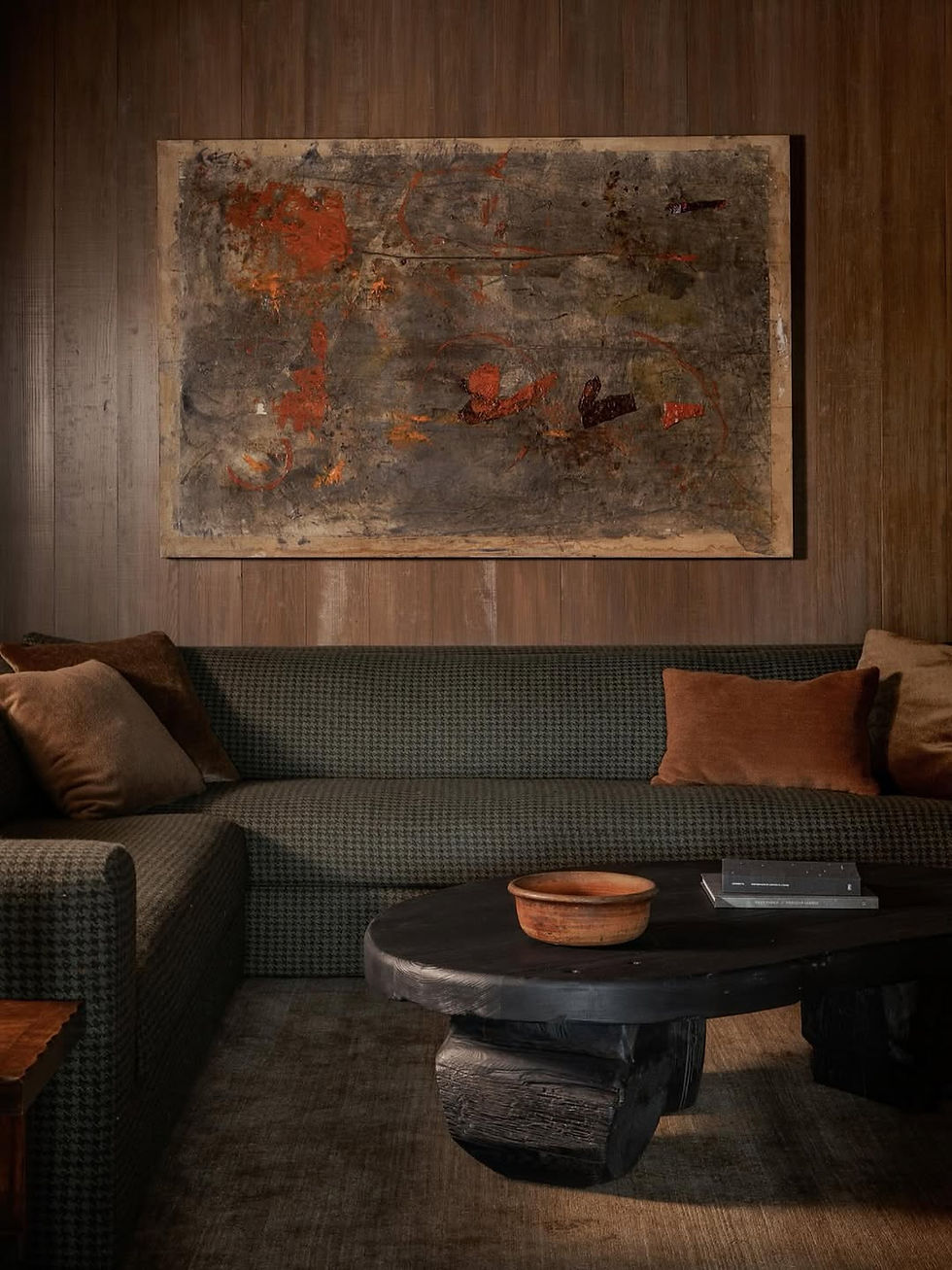
Design: Anastasia Casey for Collective Stays / Photography: Madeline Harper Photo
Phase 1: Onboarding (From Inquiry to Signed Contract)
This phase is where most interior design businesses leak the most money — and the most time. An unclear or inconsistent onboarding process means leads go cold, discovery calls don't convert, and clients arrive at their kickoff meeting without any idea what to expect.
Here's how it should flow:
The Inquiry It starts with a client completing your intake form on your website. A strategic inquiry form does two jobs at once: it gathers the basic project details you need to assess fit, and it pre-qualifies leads before you invest time in a conversation. Think rooms in scope, approximate budget, desired timeline, and how they heard about you.
The Automatic Response (Within 1 Hour) As soon as someone submits that form, an automated email should go out with your Investment Guide and a link to book a Discovery Call. Not tomorrow. Not when you remember to check your inbox. Within one hour. This first response sets the tone for how professionally you run your studio, and it locks in interest while it's still warm.
The Discovery Call This 15–30 minute call via Zoom or Google Meet is where you determine whether this is the right client for your studio, gather additional project details, and book a Paid Design Consultation. Note: the discovery call is not where you start designing. It's a filter. Keep it focused.
The Paid Design Consultation A 60–90 minute in-depth meeting where you gather everything you need to build a custom proposal — scope, budget, existing architecture, inspiration, and timeline. This consultation should be paid, and booking it with a deposit immediately signals the value of your time and filters out tire-kickers.
After this meeting, send a follow-up email, create the proposal, and schedule a virtual Proposal Review Meeting. Give your proposal an expiration date — 14-21 days is standard for luxury services like interior design. It creates urgency without pressure.
The Proposal Review + Contract Walk your client through the scope of work and design fee proposal on a virtual call. Answer questions, adjust the scope if needed, and get verbal agreement. Within 24 hours of approval, send the signed contract and retainer invoice. Once they've signed and paid, you officially have a new client.
Hot take: If you're still emailing proposals as PDFs with no expiration date and no follow-up system, you're leaving money on the table. An investment guide, a documented proposal process, and a CRM that automates your follow-up aren't luxuries — they're table stakes.
Phase 2: Project Kickoff + Hard Finishes Design
Once the contract is signed, the work begins — but so does the real opportunity to set your project up for success.
Client Onboarding (Within 24 Hours of Signed Contract) Send a welcome email with the client's homework, your Welcome Guide, and a link to schedule the kickoff meeting. Create their client folders and software accounts within three days, and map out your internal project timeline with tentative milestone dates.
The homework — a detailed questionnaire, before photos, a Pinterest board — is critical. It ensures your kickoff meeting is productive rather than exploratory, and it starts building client investment in the process.
The Kickoff Meeting A 45–90 minute meeting to review the questionnaire, confirm scope and budget, and walk through inspiration. This is where you begin to understand not just what they want, but how they live — how they use their spaces, what their aesthetic instincts are, where they've struggled with their home before.
Design Concept → Internal Review → Client Presentation Before diving into full selections, develop a concept that communicates your creative vision — whether that's a few key images, a tight mood board, or a couple of specific selections. Then review it internally before presenting to the client. The internal review step is one that smaller studios often skip, and it's the step that catches problems before they become client problems.
Hard Finishes Selection + Presentation This phase typically runs 6–8 weeks for full-service projects. You're sourcing, creating technical drawings, building design boards, ordering physical samples, and entering every selection into your design software — all before presenting to the client.
Establish clear revision rounds in your scope of work and communicate them at the start of every phase. One round of revisions is standard for most firms. Any additional revisions should be billed hourly or as an add-on — and that expectation should be set in writing, not in conversation.
Once hard finishes are approved, create your Construction Packet and send it to your contractor. Then send a product invoice for 100% of the product total before ordering anything.

Design: Anastasia Casey for Collective Stays / Photography: Madeline Harper Photo
Phase 3: Project Management
This phase runs concurrently with construction and procurement and is often the most invisible — which is exactly why it erodes profitability when it isn't properly scoped.
Project management includes site visits, weekly or bi-weekly client update emails, vendor coordination, tracking orders, managing damage claims, and keeping the project timeline on track. If you charge hourly for PM, send monthly invoices with a clear breakdown of time spent. If it's included in your fee, make sure your scope reflects a realistic estimate of the hours involved.
The most common mistake here is under-charging for project management because it doesn't feel like "design work." It absolutely is. It's what keeps the project from falling apart between your concept meeting and install day.
Phase 4: Furnishings
Many studios treat the furnishings phase as an extension of hard finishes, but it deserves its own kickoff, its own questionnaire, and its own internal rhythm.
Furniture Kickoff Meeting Schedule a dedicated kickoff with the client to revisit scope for furnishings specifically — budget per room, lifestyle needs, and any pieces they're keeping. Use a separate furniture questionnaire to gather these details in advance.
Sourcing, Floorplans + Presentation This phase also runs approximately 6–8 weeks. You're creating layouts for every room, sourcing to a budget, and building a full furniture presentation with design boards, renderings, and estimated pricing per room. The presentation should feel just as polished as your hard finishes reveal.
Follow the same revision structure as the hard finishes phase — one included round, additional rounds billed separately. Once the client approves, the procurement team reviews every specification before any product is ordered, and the client pays in full before purchase orders go out.
Phase 5: Install
Install day is the culmination of months of work, and it deserves that level of preparation.
30–60 Days Out Confirm the completion date with your contractor and schedule the install date with the client. Book delivery, any handyman or art installer, and your photographer. If the schedule allows, these should all happen within the same window to minimize disruption and maximize the photoshoot.
2 Weeks Out Print room labels, floor plans, and product lists. Have linens laundered, light bulbs and pillow inserts ready, and your install kit packed. Order florals if that's part of your install day. Confirm your shot list and any styling details for the photoshoot.
Install Day (1–3 Days) Deliver, install, place, and style everything. If you have a styling phase post-install for final finishing touches, build a retainer for that into your scope — not as an afterthought.
Client Final Walk-Through Walk every space with your client and create a documented list of any outstanding items — small punch list tasks that need to be resolved within 30 to 90 days. Send weekly status updates until they're complete.
Project Completion Email This final communication is more important than most designers give it credit for. It officially closes the project, summarizes what was delivered, requests a testimonial or review, and — if you include a client gift — plants a powerful seed for referrals. A handwritten note and a well-chosen gift (a coffee table book, a candle, monogrammed linens) make your goodbye as memorable as your hello.
Phase 6: Completion
Client Final Walk-Through Walk every space with your client and create a documented list of any outstanding items — small punch list tasks that need to be resolved within 30 to 90 days. Send weekly status updates until they're complete.
Project Completion Email This final communication is more important than most designers give it credit for. It officially closes the project, summarizes what was delivered, requests a testimonial or review, and — if you include a client gift — plants a powerful seed for referrals. A handwritten note and a well-chosen gift (a coffee table book, a candle, monogrammed linens) make your goodbye as memorable as your hello.
The Real Value of an Outlined Interior Design Process
Here's what a step-by-step workflow actually does for your business beyond just keeping projects on track:
It communicates professionalism before a client ever meets you. When clients receive a clear investment guide, an organized onboarding packet, and phased communication, they don't question your rates — they trust them.
It protects your profit margins. Clear scope definitions, revision limits, and documented product invoices mean fewer scope creep conversations and fewer projects that bleed time and money.
It supports your team. When tasks have an owner, a timeline, and a note, no one has to wonder what they're supposed to be doing next. You spend less time managing people and more time designing.
It scales. You can't duplicate yourself. But you can duplicate a well-built process and hand it to a new designer, a studio manager, or an admin with confidence that the client experience won't slip.

Want the Exact Template?
We mapped out all 90 steps of this workflow — broken into six phases with task ownership, timelines, automation prompts, and detailed notes for every single step — in our Interior Design Process Outline.
It's a fully editable Google Sheet developed in collaboration with Renee Bush of Tandem and Brooke Stoll — two designers who have built incredibly refined, scalable processes for their own studios. The template covers every phase from inquiry through project closeout and was built to be customized once to reflect your studio's exact workflow, then duplicated for every new client.
Even if you already have a process you love, the template is valuable for two reasons. First, it's a reality check — a chance to compare what you're doing against what's become the industry standard and identify any gaps. Second, it eliminates the blank-page problem. Editing a thoughtfully structured template is significantly faster than building a process document from scratch, and the formatting is already done.
Whether you're a solo designer booking your first full-service clients or managing a team of five, a documented process is one of the highest-leverage investments you can make in your studio.
Looking for more on building a business that runs as beautifully as your designs? Listen to The Interior Collective podcast for in-depth conversations with successful designers on pricing, processes, client experience, and more.